Thinking about buying a West Palm Beach condo for seasonal rental income? You are on the right track, but the market’s rhythm can surprise even experienced investors. Winter demand is strong, while summer softens and costs like HOA fees and insurance add up fast. In this guide, you will learn how demand really flows across Palm Beach County, how to choose the right rental model under condo rules, what amenities guests expect, and how to run a conservative ROI before you buy. Let’s dive in.
Market seasonality in West Palm Beach
West Palm Beach and the wider West Palm Beach–Boca Raton–Delray Beach metro are highly seasonal. The primary high season runs roughly November through April, with the strongest months December through March. Summer and hurricane season are lower demand, so occupancy and nightly rates typically fall. Plan for multi-month softness and use a strategy that fits both winter peaks and off-season realities.
High-season demand drivers
The winter months attract snowbird renters who prefer 2 to 4 month stays. You can also capture leisure travelers during holiday periods and event-driven visits. Proximity to beaches, downtown West Palm Beach, cultural districts, and major employers improves year-round appeal. Expect materially higher average daily rate in winter than summer.
Off-season patterns and opportunities
From June through November, occupancy often slides and price sensitivity rises. Many owners pivot to 30 to 90 day stays in summer to stabilize cash flow. Be ready to adjust minimum-stay rules and reduce rates to maintain occupancy. Reserve funds matter because late summer and early fall are peak hurricane months.
Choose the right rental model
Your building’s rules will shape your plan. Many Palm Beach County condos prefer longer minimums, so align your strategy before you buy.
Short-term nightly
- Pros: Highest rate potential in winter and strong conversion when well marketed.
- Cons: Often restricted by condo rules, higher management and platform fees, frequent turnovers, and higher operating complexity.
- Best for: Buildings that permit nightly stays and units near beaches or high-amenity districts where ADR can offset costs.
Seasonal monthly (30–90 days)
- Pros: Commonly allowed, fewer turnovers, smoother operations, and attractive to winter snowbirds.
- Cons: Lower peak-nightly upside versus nightly rentals.
- Best for: Buildings with 30 to 90 day minimums and owners who value stable occupancy across shoulder months.
Annual lease
- Pros: Lowest complexity and platform costs with consistent cash flow.
- Cons: Lower gross rent potential compared with high-season nightly demand.
- Best for: Investors prioritizing simplicity and lower volatility.
Know the rules before you buy
Condo and local regulations come first. Build your underwriting around what is actually allowed.
Association rental limits
Many associations set minimum lease terms of 30 to 90 days or restrict the number of leases per year. Some buildings do not permit short-term nightly rentals at all. Obtain and review the Declaration, Bylaws, and Rules and Regulations plus any recent amendments. Ask the HOA for a written summary of current rental policies and whether changes are being considered.
City and tax compliance
Cities and counties may require business licensing, transient rental registration, and tax collection. West Palm Beach and Palm Beach County have local rules and transient-occupancy tax obligations. Confirm code requirements, registration steps, and how sales and bed taxes are collected and remitted before you project nightly income.
Insurance and risk
In South Florida, wind and flood exposures are part of the model. Review the building’s master insurance to see what it covers and what falls to your unit policy. Short-term rental liability may require specialized coverage beyond a standard HO-6 policy. Budget for hurricane-year stress scenarios where repairs or outages delay bookings.
Amenities that book and rebook
Renters in West Palm Beach expect a comfortable, well-equipped stay. Focus on the essentials and a few high-impact extras.
- Reliable high-speed Wi‑Fi and streaming-capable TVs
- Central AC, a full kitchen, and quality beds and linens
- In-unit or in-building washer/dryer and starter supplies
- Secure, convenient access such as keyless locks
- Parking access, which is a major driver in urban locations
- Building amenities like a pool and fitness center
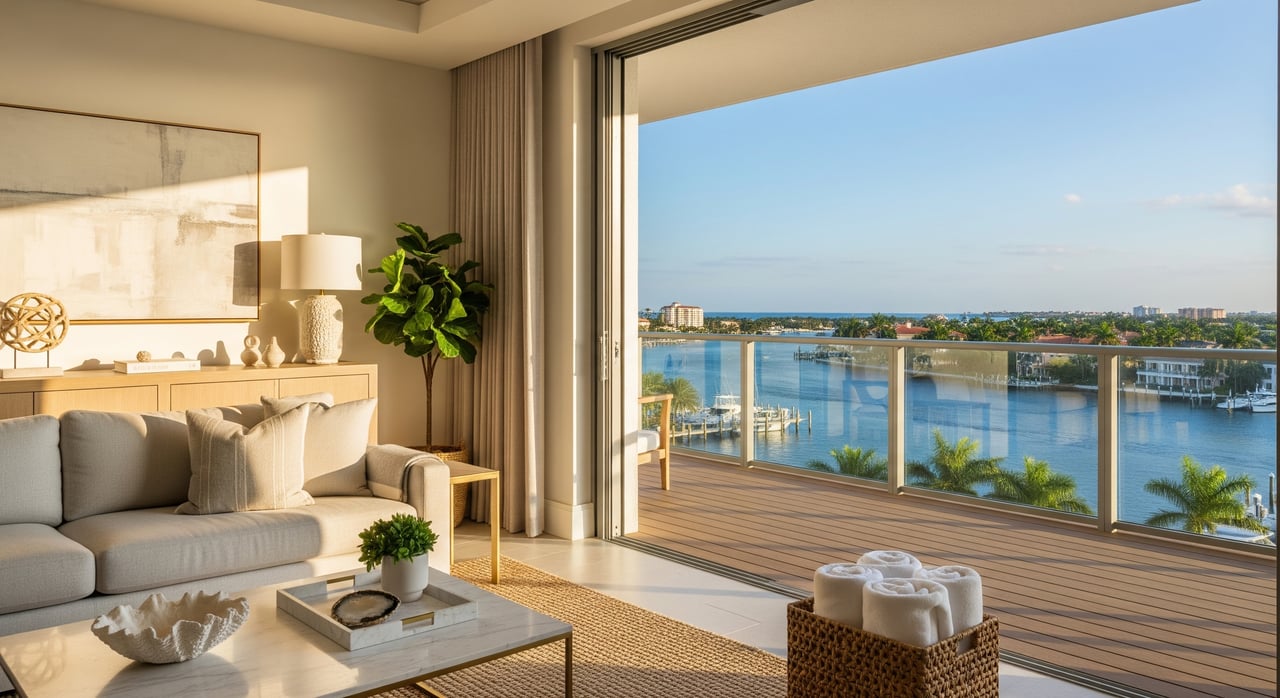
- Balcony or terrace and beach-proximity benefits
- Beach gear, clear house info, and responsive communication
A mid-range furnishing package is often the sweet spot for WPB seasonal rentals. Setup budgets commonly range from about $5,000 to $25,000 depending on size and finish level. Plan to refresh textiles and high-use items every 3 to 7 years.
Pricing and revenue management
Revenue management is not optional in a seasonal market. A simple calendar strategy goes a long way.
Rates and minimum stays by season
- Winter peak: Increase nightly rates and set longer minimum stays to secure multi-week bookings.
- Shoulder months: Use flexible minimums to maintain conversion.
- Summer: Consider monthly or 30+ day stays to stabilize occupancy and reduce turnovers.
Platform mix and marketing
If nightly rentals are allowed, diversify exposure across major platforms and direct channels. Professional photos and clear amenity descriptions are essential. Highlight proximity to beaches, marinas, downtown WPB, and cultural venues. Keep a quick-response standard to protect your conversion rate.
A conservative ROI example
Start with a blended annual average rather than peak-season hopes. This helps you stress-test the numbers and avoid surprises.
- Assumptions: 1-bedroom at $350,000, blended ADR $200, 50% occupancy (about 182.5 nights)
- Gross revenue: $36,500
- Typical annual expenses under a short-term model: management at 25%, HOA around $10,800 for a mid-amenity building, property tax around 1 to 2% of value, insurance, utilities, cleaning and turnovers, platform fees, and a 1 to 3% reserve for maintenance and capital items.
Using conservative inputs, the sample scenario produces negative cash flow. That is a signal to adjust strategy, not a reason to walk away. Your levers include lowering HOA costs through building selection, raising occupancy via hybrid seasonal leases, self-managing to reduce fees, or targeting units with stronger winter ADR potential near water or walkable downtown zones.
Due-diligence checklist
Move quickly, but with discipline. Use this list before you write an offer.
- Association docs: Declaration, Bylaws, Rules and Regulations, rental policies, recent amendments
- HOA confirmations: written rental rules, pending changes, meeting minutes for 12 to 24 months
- Financials: reserve study, operating budget, special assessments, insurance coverage and loss history
- Regulations and taxes: city registration, occupancy limits, safety inspections, transient and sales tax steps
- Market validation: short-term comps for ADR and occupancy, monthly/seasonal comps for 30+ day leases, talks with 2 to 3 local property managers
- Physical risks: inspection with hurricane focus, flood zone status, multiple insurance quotes
- Operations: Wi‑Fi options, keyless entry approvals, linen and trash rules, elevator and loading policies
- Exit plan: three-scenario model, target NOI and cash-on-cash, hold period and resale considerations
Hurricane-season planning
Create a property and cash-flow plan for August through October. Build a reserve for several months of reduced bookings and potential repairs. Secure wind and flood coverage aligned to your risk profile. Set clear guest policies for storm procedures and cancellations.
How The Paiz Group supports investors
You want clear numbers, compliant buildings, and a practical plan for both winter and summer. We help you identify buildings with rental-friendly rules, pressure-test ROI with conservative assumptions, and coordinate a smooth acquisition with the right experts. If you are considering a seasonal or hybrid strategy in West Palm Beach or the broader Palm Beach County market, reach out to The Paiz Group for a tailored, data-informed advisory experience.
Ready to map your condo rental strategy and shortlist the right buildings? Connect with The Paiz Group to start a focused search and an underwriting plan that fits your goals.
FAQs
When is peak season for West Palm Beach condo rentals?
- High season typically runs November through April, with December to March seeing the strongest demand and higher average daily rates.
What lease minimums do WPB condos usually require?
- Many buildings set minimums of 30 to 90 days and may limit the number of leases per year, while some prohibit nightly stays entirely.
How do HOA fees affect condo rental ROI in Palm Beach County?
- Higher HOA fees increase fixed costs and can turn a marginal short-term model negative unless ADR and occupancy are strong.
What insurance should I consider for a seasonal rental condo?
- Review the HOA master policy, secure an HO‑6 policy, and consider added wind and flood coverage plus short-term rental liability if applicable.
How can I reduce vacancies during hurricane season?
- Shift to 30+ day leases, price competitively, maintain strong photos and listings, and budget reserves for potential weather disruptions.